Become a PR Powerhouse
Précis Best Practices, Tips and Shortcuts
 Back to Catalogue
 Blog
Blog
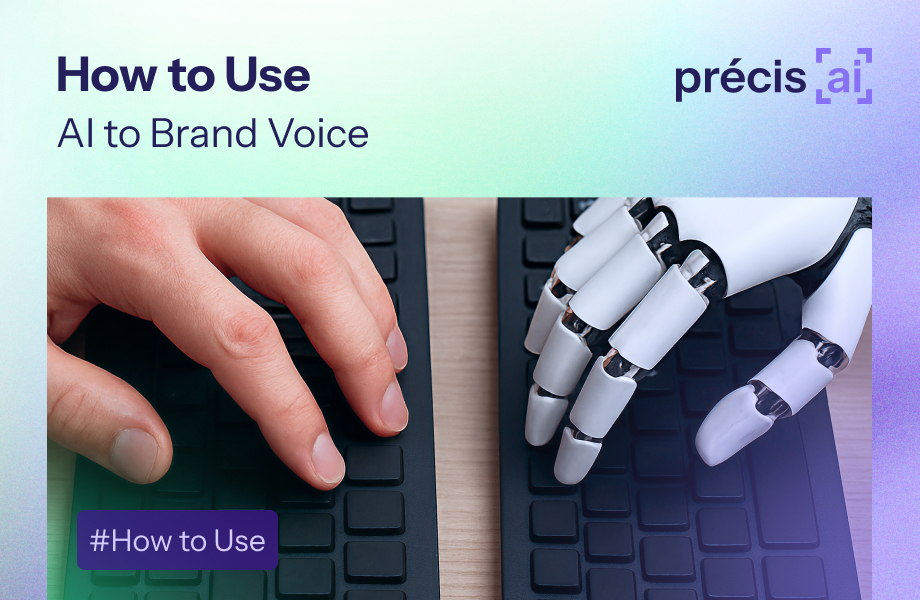
Listen to this blog with one of our AI generated voices.
Utilizing artificial intelligence for your brand’s voice isn’t about replacing your creative instincts. It’s about scaling consistent, memorable communication at every audience touchpoint. With the right approach, AI-powered tools can analyze, learn, and elevate your brand’s unique style, ensuring consistent messaging that resonates every time.
Start by clarifying the purpose of your brand voice before launching into AI assistance. Consider whether you are amplifying thought leadership through a whitepaper, driving conversions in email marketing, or building trust on social channels. This clarity will help guide you in establishing your brand’s tone.
Next, gather the materials that reflect your brand’s essence, such as style guides, messaging frameworks, campaign summaries, and audience personas. Then, upload all of these documents into the AI platform. This gives the AI the best possible input which will ensure the AI output is true to your brand’s voice.
AI can deliver impressive first drafts, but your brand reputation hinges on the human touch. With this in mind, follow Précis‘ Collect → Craft → Draft → Refine best practice approach for successful AI content creation.
As the PR professional, review each AI output for factual accuracy and your brand’s nuances. This will make sure nothing “off-brand” slips through.
AI’s greatest asset is infinite recall: it never gets tired, never forgets a guideline, and can check every line of copy.
By defining clear brand voice guidelines, training your AI with real brand documents, and working collaboratively to refine outputs, you are empowered to communicate with precision, emotional resonance, and speed. With AI shouldering routine checks and highlighting deviations, you reserve your creative energy for what humans do best: meaningful storytelling and connection.

 Blogs
Blogs  Blogs
Blogs 
 Press Releases