
Become a PR Powerhouse
Précis Best Practices, Tips and Shortcuts
 Back to Catalogue
 Blog
Blog
Listen to this blog with one of our AI generated voices.
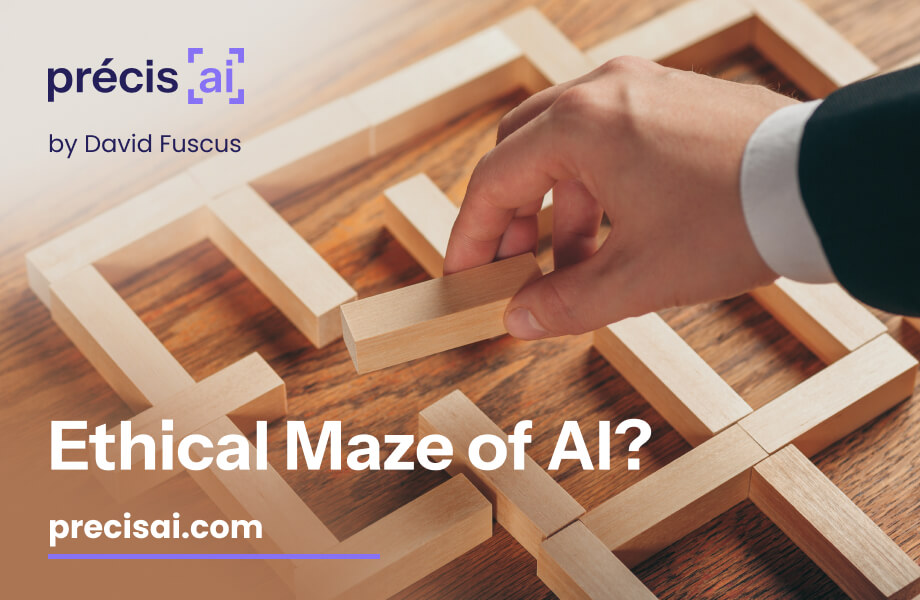
Ethical Implications for AI-Driven PR
In PR Week’s recent 2024 Global Comms Report, the use of AI in public relations is still largely experimental. Only 14% of U.S. PR agencies report regularly using generative AI for content creation, while 45% are experimenting (largely with ChatGPT), and a significant 41% aren’t using it at all. Part of the reason for these surprising numbers is that effective PR-specific AI tools haven’t appeared in the marketplace yet.
However, this is changing. Précis Public Relations is the first comprehensive AI platform specifically built and trained for PR, and others will likely follow. Data gathered from a 28-country, five-month beta test of the Précis platform reported dazzling time savings, indicating that AI is set to become omnipresent in the PR industry. After all, what agency or corporate comms department will be able to resist creating quality content 61% faster?
AI Tools for Marketing & PR: A Technological Revolution
The public relations industry is clearly standing on the precipice of a technological revolution. The integration of artificial intelligence (AI) into daily practices is both inevitable and transformative. However, with great power comes great responsibility, and the ethical use of AI in PR demands the immediate and undivided attention of the entire industry.
Recent guidelines issued by leading industry bodies underscore the importance of ethical considerations in the deployment of AI tools. The PR Council and the Public Relations Society of America (PRSA)have both provided comprehensive frameworks to ensure that AI enhances, rather than undermines, the integrity of the PR profession.
AI Marketing & PR: Balancing Benefits and Ethical Challenges
AI’s potential to revolutionize PR is undeniable. From generating content to analyzing data and engaging with customers, AI tools can significantly boost productivity and efficiency. However, these benefits come with significant ethical challenges. AI lacks human judgment and understanding, which can lead to the propagation of misinformation, bias, and privacy violations. For instance, generative AI tools, while capable of producing vast amounts of content, often do so without the nuanced understanding that human professionals bring to the table.
The PRSA’s Code of Ethics provides a robust framework for navigating these challenges. Key principles such as ensuring the free flow of information, promoting fair practices, and safeguarding confidences are more relevant than ever in the age of AI. These principles serve as a reminder that while AI can assist with PR work, it cannot replace the ethical judgment and critical thinking that are the hallmarks of the PR and marketing profession.
Addressing Bias and Ensuring Transparency
One of the most pressing concerns with AI in PR is the potential for bias. AI systems are trained on large datasets, which can inadvertently include biases present in the data. This can lead to biased outputs, which can perpetuate stereotypes and misinformation. The PR Council’s guidelines emphasize the importance of validating AI-generated content for accuracy and potential biases. This involves not only checking the content for factual accuracy but also ensuring that it does not inadvertently propagate harmful stereotypes or misinformation.
Another critical aspect of ethical AI use in PR is transparency. The PR Council recommends that agencies disclose the use of AI tools in their creative processes to clients. This transparency builds trust and ensures that clients are fully aware of how their content is being generated. It also addresses legal concerns, as AI-generated content may not be fully protected under current copyright laws.
The Future of AI in PR: Ethical Considerations and Professional Integrity
The integration of AI into PR practices also raises questions about the future of the profession. As AI takes over more routine tasks, there is a risk that junior professionals may miss out on valuable learning opportunities. The PRSA’s guidance highlights the importance of human oversight in AI applications, particularly in sensitive areas such as hiring and financial reporting. This oversight ensures that AI is used responsibly and that junior professionals continue to develop the skills they need to succeed in the industry.
PR agencies are increasingly developing their own guidelines to govern the use of generative AI. These internal policies are designed to align with broader industry standards while addressing specific needs and concerns within each agency. By establishing clear protocols for AI use, agencies can better manage the ethical and practical implications of this technology. This proactive approach not only safeguards the integrity of the profession but also enhances the agency’s ability to deliver high-quality, ethical services to clients.
Navigating the Ethical Landscape of AI in PR
The Précis beta test results highlight the transformative potential of AI, with users reporting an average time savings of 61% on individual tasks and over 10 hours saved weekly by heavy content producers. These productivity gains are not just impressive; they are game-changing. They allow PR professionals to focus more on strategic and creative tasks, ultimately delivering greater value to clients.
As agencies and in-house teams continue to adopt and refine AI tools, the landscape of public relations will be irrevocably transformed. The challenge lies in ensuring that this transformation is guided by ethical principles and a commitment to professional integrity.
As AI technology continues to evolve, PR professionals must remain vigilant about its ethical implications. This includes staying informed about the latest developments in AI and continuously evaluating the impact of AI on work product. The PR Council’s guidelines recommend regular training on best practices for using AI, avoiding potential biases, and maintaining transparency with clients and stakeholders.
The ethical use of AI in PR is a complex and multifaceted issue. While AI offers exciting opportunities to enhance work products, it is crucial that its use is approached with caution and a strong ethical framework. And paying attention to industry guidelines like those of the PR Council and the PRSA, PR professionals can ensure that AI serves to enhance, rather than undermine, the integrity of the profession.
###

 Blogs
Blogs  Blogs
Blogs 
 Press Releases